All posts tagged: Science

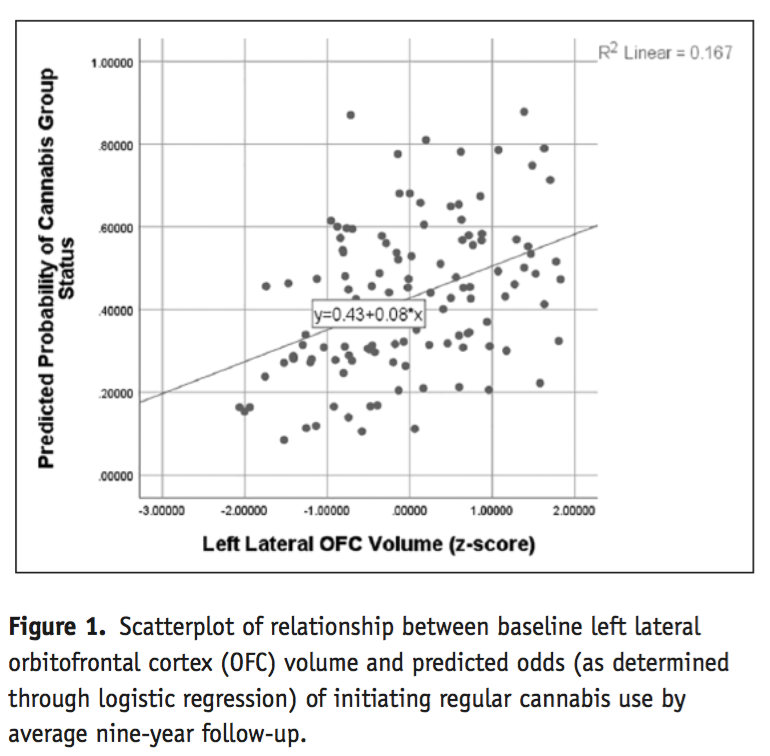
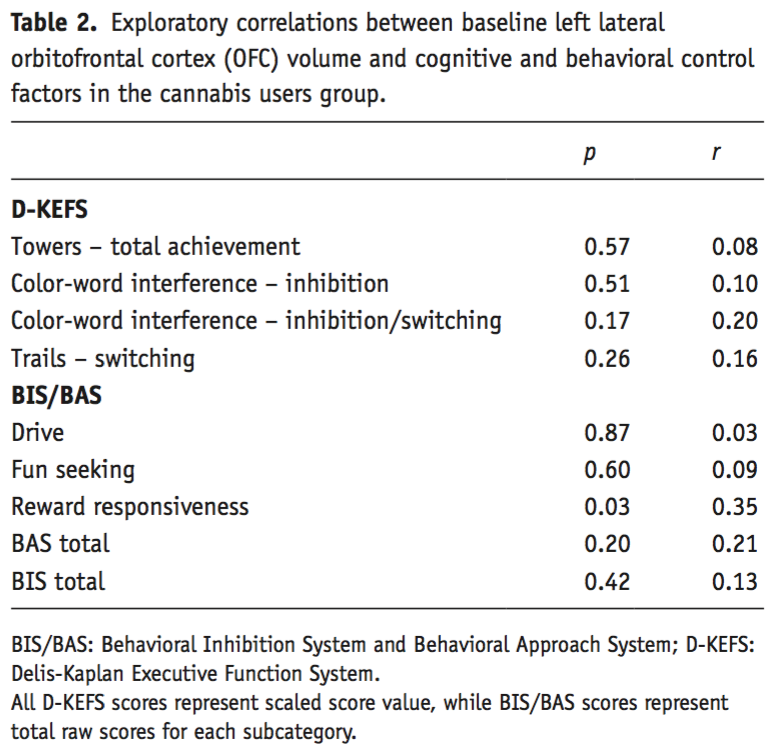
Volume of Brain (Lateral Orbitofrontal Cortex) Predicts Drug Use

Orbitofrontal cortex volume prospectively predicts cannabis and other substance use onset in adolescents

Researchers have recently unveiled that the volume of the lateral orbitofrontal cortex (OFC) is able to predict future substance use in adolescents. Individuals were followed for 13 years after undergoing magnetic functional resonance imaging and surveyed for cannabis and alcohol use. Interestingly, the authors chose to utilize those who had used cannabis, but in limited quantities, as a control group instead of including them in their cannabis users group. Similarly, the alcohol only group of participants also included those who used cannabis multiple times within the past year. Nevertheless, the authors conclude that the size of the lateral OFC is able to predict drug use in adolescents although not without admitting the need for replication and validity. 

This paper represents an important example of biased information within the medical community. Bias is inherent, there is no way around it. But, it is the duty of researchers to publish their findings while remaining as objective as possible, and to do so, transparently. The grouping decisions for the study groups here, and the choices the authors made regarding statistical analysis of this data are odd, considering their definitions and broad claims. This may be due to the views of the organization funding the research, or the bias of the research team members themselves, but the limitations of the study should be considered strongly. Even beyond the groupings, the fact that this research took place in a state where cannabis use is legal for recreational and medical use is a reason to consider other confounding variables. Scientists have an obligation to pursue the truth and not extrapolate their findings to fit a personal or professional agenda. Many articles cherry-pick statistics and extrapolate small findings of data, leaving readers and media outlets to polularize findings that do not represent a full picture. It falls on discerning readers to read mindfully and consider a study’s methodolgy and demographics, as carefully as possible. 

View this review (yellow link) or download:

This paper is also stored here:  http://bit.ly/2Xh7wNH       inside the CED Foundation Archive

To explore related information, click the keywords below:


Benjamin Caplan, MDVolume of Brain (Lateral Orbitofrontal Cortex) Predicts Drug Use
read more

Benin Republic Hemp Improves Male Fertility

Cannabinoid-deficient Benin republic hemp (Cannabis sativa L.) improves semen parameters by reducing prolactin and enhancing antioxidant status

Cannabis sativa, specifically Nigerian hemp, has been found to have adverse effects on male fertility. It’s use has been linked to a decrease in semen parameters, germ cell proliferation, and reproductive organ weight. It can induce hyperprolactinemia, a condition causing infertility in 11% of men with low sperm count.

Data from the National Drug Law Enforcement Agency in Nigeria has suggested users preferentially obtaining hemp from the Benin Republic. In a recent study investigating the composition of Benin republic hemp, a lack of THC and lower levels of cannabinol were observed. Additionally, an ethanol extract of Benin republic hemp increased sperm count, morphology, and viability.   

Additional Point: Certain phytocannabinoids found in cannabis have demonstrated a detrimental effect on male fertility. However, analysis of hemp from the Benin republic shows a low to no levels of these toxic cannabinoids and evidence points to this particular hemp enhancing male fertility.

View this review (yellow link) or download:

This paper is also stored here:    http://bit.ly/2Yzc26y     inside the CED Foundation Archive

To explore related information, click the keywords below:


Benjamin Caplan, MDBenin Republic Hemp Improves Male Fertility
read more

Adolescent E-Cigarette Use Increased by 78%

Characteristics of Daily E-Cigarette Use and Acquisition Means Among a National Sample of Adolescents

From 2017 to 2018 the amount of middle school and high school electronic cigarette (e-cigarette) users increased by 48% and 78% respectively. One of the first studies examining the association between e-cigarette characteristics and daily use among US adolescents is calling for comprehensive tobacco control efforts to reduce e-cigarette and nicotine addiction among adolescents. 38% of adolescent users report using their e-cigarette devices for cannabis which can be hazardous due to the lack of regulation. The potential risks associated with nicotine use and the dangerous misuse of these devices for other substances is putting youth’s health at risk.

View this review (yellow link) or download:


This paper is also stored here:    http://bit.ly/2Ff733m     inside the CED Foundation Archive

To explore related information, click the keywords below:

Benjamin Caplan, MDAdolescent E-Cigarette Use Increased by 78%
read more

The Relationship between Cannabis and Schizophrenia

Cannabis and Psychosis: Are We any Closer to Understanding the Relationship?

Despite the constant technological gains in medicine, there is still insufficient information and knowledge about who is at risk of developing cannabis psychosis prior to an individual’s exposure to cannabis. Controlled research is limited due to the legal status of cannabis but the growing number of states legalizing medicinal and recreational use of cannabis will likely provide a naturalistic experiment that will produce a prevention strategy for the condition. Current schizophrenia research is limited to western male populations and an overemphasis on the biological model; future research should extend to a more diverse population and sociocultural factors that may lead to schizophrenia.

View this review (yellow link) or download:

This paper is also stored here:   http://bit.ly/2FcDVJR      inside the CED Foundation Archive

To explore related information, click the keywords below:


Benjamin Caplan, MDThe Relationship between Cannabis and Schizophrenia
read more

80%: Cannabis extremely helpful for pain; 82%: helped reduce or stop over-the-counter medications; 88% able to stop taking opioid painkillers

“The study, published in the Journal of Psychoactive Drugs, which looked at 1,000 people taking legalized marijuana in an American state found that among the 65% of people taking cannabis for pain, 80% found it was very or extremely helpful.”

“82% of these people being able to reduce, or stop taking over the counter pain medications, and 88% being able to stop taking opioid painkillers.”

“74% of the 1,000 interviewees bought it to help them sleep – 84% of whom said the marijuana had helped them, and over 83% said that they had since reduced or stopped taking over-the-counter or prescription sleep aids.”

“The study adds weight to the theory that widening access to medical cannabis could lower the use of prescription painkillers, allowing more people to manage and treat their pain without relying on opioid prescription drugs that have dangerous side effects.”

“This is backed up with other research that shows that states with medical cannabis laws have a 6.38% lower rate of opioid prescribing and that Colorado’s adult-use cannabis law is associated with a relative reduction in opioid overdose death rate from 1999 to 2010.”

“”Nonsteroidal anti-inflammatory drugs (NSAIDs) such as ibuprofen cause GI bleeding or kidney damage with chronic use. Paracetemol (Acetaminophen) toxicity is the second most common cause of liver transplantation worldwide, and is responsible for 56,000 ER visits, 2600 hospitalizations, and 500 deaths per year in the U.S.”

Link to news brief: https://eurekalert.org/pub_releases/2019-07/tfg-cmb062819.php

View this review (yellow link) or download:

This paper is also stored here:    http://bit.ly/2JmB7Lv     inside the CED Foundation Archive

To explore related information, click the keywords below:

Benjamin Caplan, MD80%: Cannabis extremely helpful for pain; 82%: helped reduce or stop over-the-counter medications; 88% able to stop taking opioid painkillers
read more

Non-Psychoactive Cannabis Treatments for Chronic Muscle Pain

Cannabidiol, cannabinol and their combinations act as peripheral analgesics in a rat model of myofascial pain

Some of the non-psychoactive cannabinoids in cannabis, cannabidiol (CBD) and cannabinol (CBN), have recently been found to produce analgesic effects (pain relief) in mouse models. A combination of CBD and CBN causes a decrease in sensitization of muscles, leading researchers to believe the combination could provide relief for those suffering from chronic muscle pain disorders. Cannabis products are already being prescribed for chronic pain disorders and this new study provides evidence that cannabis-based medicine can also be applicable when treating chronic pain associated with disorders such as fibromyalgia and temporomandibular disorders.

View this review (yellow link) or download:

This paper is also stored here:     http://bit.ly/2L1AF8d    inside the CED Foundation Archive

Benjamin Caplan, MDNon-Psychoactive Cannabis Treatments for Chronic Muscle Pain
read more

Cannabinoids in the treatment of cancer

A literature review from 2009 (10 years ago) summarizes the anti-cancer properties of cannabis, concluding that various cannabinoids might inhibit cancer cell growth and tumor growth. In particular, cannabis shows promise to help treat colon, skin, prostate, and breast cancer. 

This paper is also stored here:    http://bit.ly/2J1XS8A     inside the CED Foundation Archive

To explore related information, click the keywords below:

Benjamin Caplan, MDCannabinoids in the treatment of cancer
read more

Sex differences in the anxiety effects of cannabinoids

In overarching trends, one pattern that is seen in the medical literature is a greater tendency for males to be more likely to develop drug abuse disorders than female counterparts, whilst females are more likely to develop anxiety disorders than male counterparts.

Of course, these trends are merely observational patterns in the current literature, which represents a biased perspective of biased subjects, and certainly not etched in stone. Further, many people do not conform to one pre-determined organization system as simple as gender to help educate whether they would be likely to develop drug dependence or anxiety, and even others don’t conform to a single gender. So, a sizeable grain of salt must be taken with what we understand from this literature.

That given, the relevant punch line here is what role might cannabis play in inducing or reducing anxiety across sexes, and how does cannabis might relate to addiction/dependence.

We are still at early stages of these important questions, but one recent study found, that female rats were significantly more likely than male rats to experience anxiety when given large doses of cannabis.

View this review (yellow link) or download:

This paper is also stored here:    http://bit.ly/2J15XdL     inside the CED Foundation Archive

To explore related information, click the keywords below:

Benjamin Caplan, MDSex differences in the anxiety effects of cannabinoids
read more

Cannabidiol Treatment for Parkinson’s Disease

Cannabidiol: a hope to treat non‑motor symptoms of Parkinson’s Disease Patients

Cannabidiol (CBD) has recently been postulated as an ideal drug to address the treatment of non-motor symptoms of Parkinson’s Disease (PD) due to its multifaceted mechanism of action. The plethora of effects of CBD includes anti-inflammatory, neuroprotective, anxiolytic, and antipsychotic actions, which improve non-motor symptoms of PD and lift the quality of life for patients coping with the illness. Further research is recommended to garner support for FDA approval.

View this review (yellow link) or download:

This paper is also stored here:    http://bit.ly/2KXTb0Y     inside the CED Foundation Archive

To explore related information, click the keywords below:

Benjamin Caplan, MDCannabidiol Treatment for Parkinson’s Disease
read more