All posts tagged: Adverse Effects

Supplementing Antipsychotics with CBD Enhances Psychotic Symptom Treatment

Cannabidiol (CBD) as an Adjunctive Therapy in Schizophrenia: A Multicenter Randomized Controlled Trial

Most schizophrenia medications function by blocking the action of the dopamine D2 receptor and effectively treat positive psychotic symptoms, such as delusions or hallucinations, but fail to treat negative psychotic symptoms, such as lack of motivation or the lack of an ability to feel pleasure. Anecdotal evidence has pointed toward the potential for CBD to attenuate psychotic symptoms in conjunction with normally prescribed antipsychotics; additionally, CBD is not hypothesized to act on the D2 receptor, suggesting that it may afford unique advantages over anti-psychotics.

Researchers interested in further exploring this conducted the first known placebo-controlled CBD trial among schizophrenia patients. Although results did not suggest a potential for CBD to treat negative psychotic symptoms, in conjunction with antipsychotics, the CBD group experienced marked lower levels of positive psychotic symptoms. Both the placebo and CBD groups experienced equal levels of treatment-induced adverse events, suggesting that CBD is well-tolerated.

These results suggest that CBD may be effective in treating not only schizophrenia but also psychotic symptoms associated with Parkinson’s disease and THC-induced psychosis.

Additional Point: CBD has shown to act in a neuroprotective manner and reduce the psychoactive effects of THC, making it a viable option for patients who have experienced negative side effects with THC.

View this review (yellow link) or download:

This paper is also stored here:    http://bit.ly/2WztI04     inside the CED Foundation Archive

To explore related information, click the keywords below:

Benjamin Caplan, MDSupplementing Antipsychotics with CBD Enhances Psychotic Symptom Treatment
read more

Video: Cannabinoids, Internal States, and Anxiety

A new literature review summarizing the recent findings relating to cannabis and anxiety.

Researchers conclude that CBD and low-dose THC can cause relaxation and decrease anxiety and self-spun thoughts. Some studies show that high-dose THC can cause psychotic symptoms; however, studies also show that CBD can protect against those THC-induced symptoms. Therefore, using cannabis extracts with THC and CBD could be a safe way to reduce anxiety. 

View this review (yellow link) or download:

This paper is also stored here:     http://bit.ly/2JnOpss    inside the CED Foundation Archive

To explore related information, click the keywords below:

Benjamin Caplan, MDVideo: Cannabinoids, Internal States, and Anxiety
read more

One theory for why cannabis affects people differently

Something still not entirely understood is why cannabis affects people differently. A study looking at THC interactions in the brain show that rewarding and adverse effects are produced by anatomically different areas. Individual experiences likely differ due to genetic variation.

http://bit.ly/2Jnjg8q 

Benjamin Caplan, MDOne theory for why cannabis affects people differently
read more

Current Numbers for Cannabis Use Among Pregnant Women in the United State

Self-reported Medical and Nonmedical Cannabis Use Among Pregnant Women in the United States 

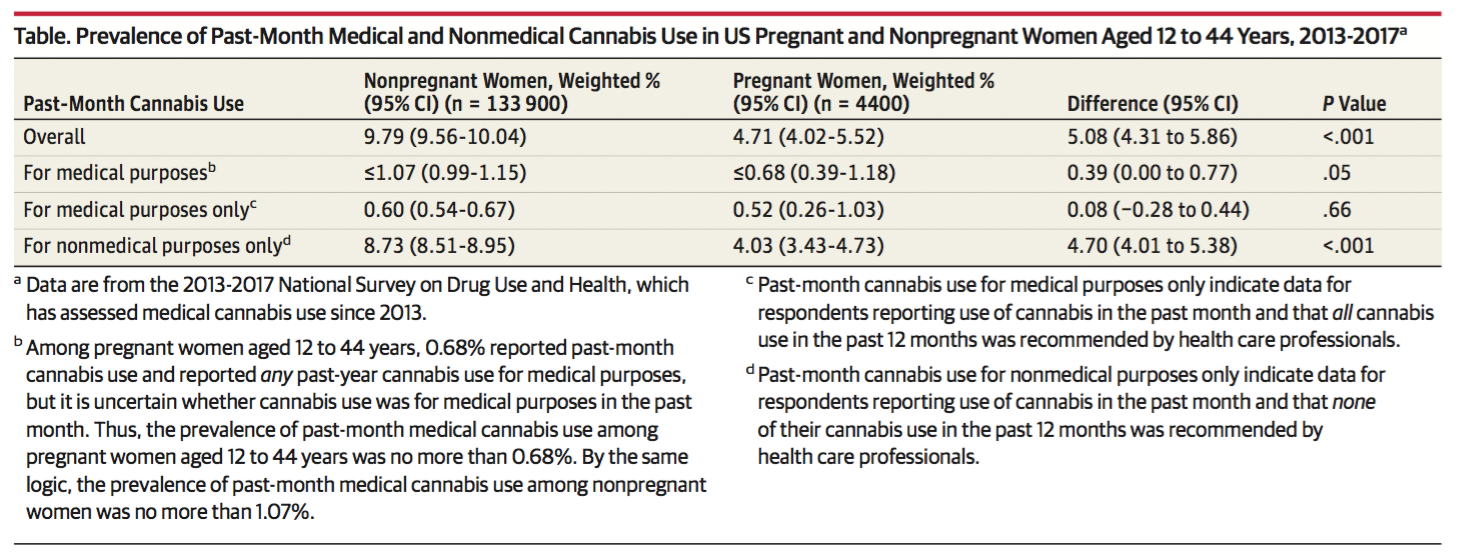
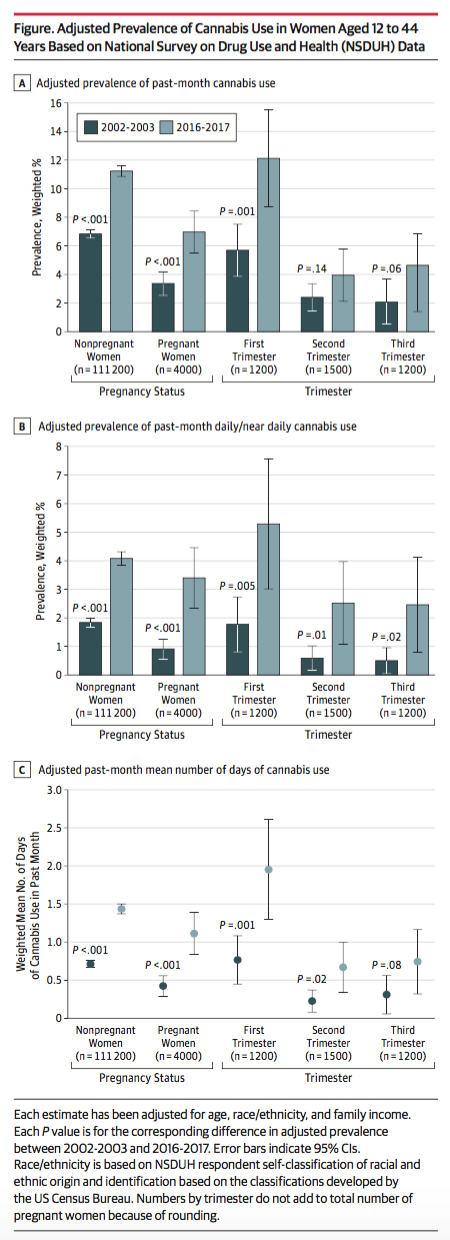
An observational study has revealed that the prevalence and frequency of cannabis use in pregnant women have increased over the past two decades.

No trends were seen although except a slight decrease in fetal growth in women who frequently used during the first two trimesters. The data concerning fetal growth, such as length and weight, were not statistically significant and would require further studies to appropriately indicate a correlation between cannabis use and decreased fetal growth.

The authors acknowledge that cannabis use may suffer from recall bias as women may underestimate the amount of cannabis they consumed or purposely withheld some information due to stigma, although some of the surveyed women were using recommended medical cannabis.  

This article highlights the large issue surrounding women consuming cannabis while expecting. Cannabinoids are able to cross the placenta and therefore affect the fetus during development. The American College of Obstetrics and Gynecologists recommend the cessation of any cannabis consumption while pregnant although there has been limited data discussing the actual effects on fetal development. A previously featured article on this blog stated that cannabis use had no effect on birth outcomes but also noted uncertainty in the possible effect on fetal growth. Considering this uncertainty, physicians should push for more research so that women who take medical cannabis can accurately discern whether or not to cease consumption while pregnant. 

View this review (yellow link) or download:

This paper is also stored here:    http://bit.ly/2Xoo0mW     inside the CED Foundation Archive

To explore related information, click the keywords below:


Benjamin Caplan, MDCurrent Numbers for Cannabis Use Among Pregnant Women in the United State
read more

A Report on the Psychiatric Effects of Cannabis Demonstrates the Progress and the Gaps in Cannabis Knowledge

Psychiatric effects of cannabis 

A report published by the British Journal of Psychiatry in 2001 demonstrates the progress the medical community has made but also what gaps still need to be filled in when utilizing cannabis. This report found that excess consumption of cannabis leads to feelings of panic and anxiety and that 15% of those willing to respond to a survey experienced acute psychotic symptoms. It was also found that cannabis dependence can occur, as well as withdrawal, which can last for close to a week.  This article was a review that synthesized relevant studies but also claimed that the casual conclusions of these papers were difficult to find or replicate. 

This paper is interesting given its age considering it put out what was current data but then ended by stating the casual conclusions of each paper may not stand. 18 years later, some of the data has stood, and some have not. Users can gain a tolerance to cannabis but many are looking to mitigate it. The author uses the word dependence when discussing cannabis which is a word that holds weight and is up for debate. Intoxicating cannabinoids, like THC, affect the reward center, but non-altering cannabinoids, such as CBD, tend to work more noticeably outside of the brain, although all have mixed effects in both regions. Cannabinoids are not all the same, apply quite differently to various ailments, and have divergent effects. Blanketing an entire crop with a misinformed warning label seems irresponsible and unduly harsh. Users or those looking into cannabis-based medicine are encouraged to do their research. 

View this review (yellow link) or download:

This paper is also stored here:   http://bit.ly/2XrRPmT      inside the CED Foundation Archive

To explore related information, click the keywords below:
Benjamin Caplan, MDA Report on the Psychiatric Effects of Cannabis Demonstrates the Progress and the Gaps in Cannabis Knowledge
read more

Volume of Brain (Lateral Orbitofrontal Cortex) Predicts Drug Use

Orbitofrontal cortex volume prospectively predicts cannabis and other substance use onset in adolescents

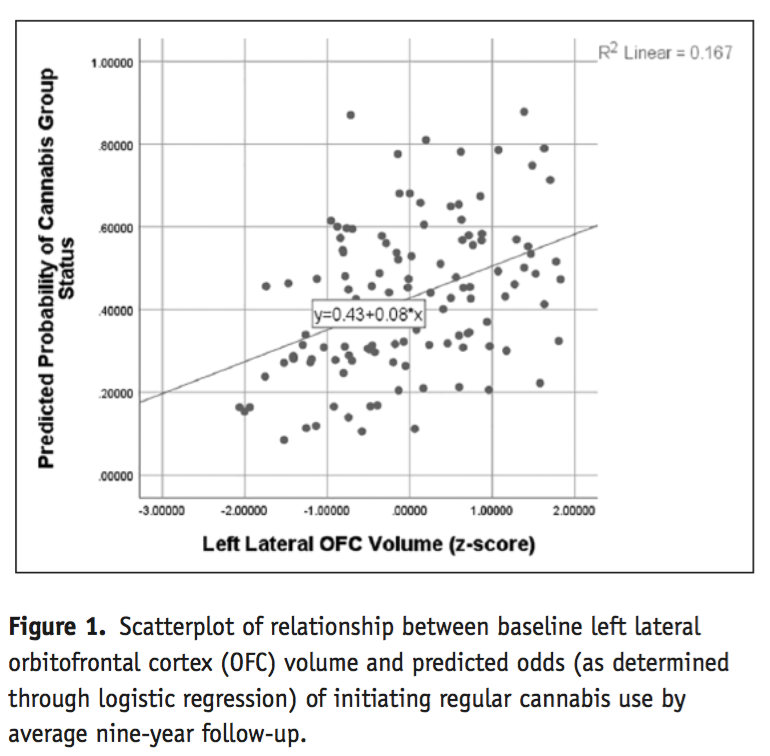
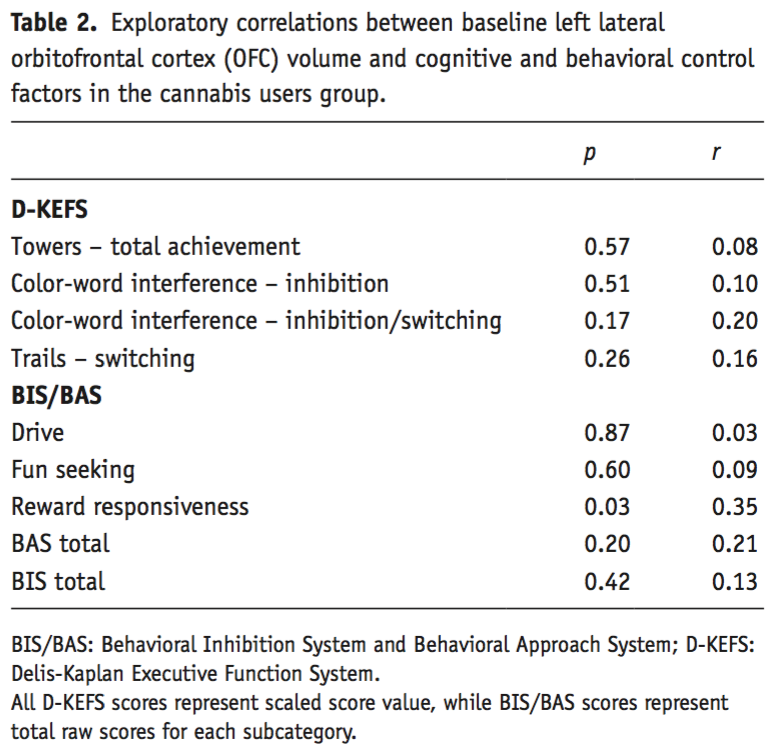
Researchers have recently unveiled that the volume of the lateral orbitofrontal cortex (OFC) is able to predict future substance use in adolescents. Individuals were followed for 13 years after undergoing magnetic functional resonance imaging and surveyed for cannabis and alcohol use. Interestingly, the authors chose to utilize those who had used cannabis, but in limited quantities, as a control group instead of including them in their cannabis users group. Similarly, the alcohol only group of participants also included those who used cannabis multiple times within the past year. Nevertheless, the authors conclude that the size of the lateral OFC is able to predict drug use in adolescents although not without admitting the need for replication and validity. 

This paper represents an important example of biased information within the medical community. Bias is inherent, there is no way around it. But, it is the duty of researchers to publish their findings while remaining as objective as possible, and to do so, transparently. The grouping decisions for the study groups here, and the choices the authors made regarding statistical analysis of this data are odd, considering their definitions and broad claims. This may be due to the views of the organization funding the research, or the bias of the research team members themselves, but the limitations of the study should be considered strongly. Even beyond the groupings, the fact that this research took place in a state where cannabis use is legal for recreational and medical use is a reason to consider other confounding variables. Scientists have an obligation to pursue the truth and not extrapolate their findings to fit a personal or professional agenda. Many articles cherry-pick statistics and extrapolate small findings of data, leaving readers and media outlets to polularize findings that do not represent a full picture. It falls on discerning readers to read mindfully and consider a study’s methodolgy and demographics, as carefully as possible. 

View this review (yellow link) or download:

This paper is also stored here:  http://bit.ly/2Xh7wNH       inside the CED Foundation Archive

To explore related information, click the keywords below:

Benjamin Caplan, MDVolume of Brain (Lateral Orbitofrontal Cortex) Predicts Drug Use
read more

Benin Republic Hemp Improves Male Fertility

Cannabinoid-deficient Benin republic hemp (Cannabis sativa L.) improves semen parameters by reducing prolactin and enhancing antioxidant status

Cannabis sativa, specifically Nigerian hemp, has been found to have adverse effects on male fertility. It’s use has been linked to a decrease in semen parameters, germ cell proliferation, and reproductive organ weight. It can induce hyperprolactinemia, a condition causing infertility in 11% of men with low sperm count.

Data from the National Drug Law Enforcement Agency in Nigeria has suggested users preferentially obtaining hemp from the Benin Republic. In a recent study investigating the composition of Benin republic hemp, a lack of THC and lower levels of cannabinol were observed. Additionally, an ethanol extract of Benin republic hemp increased sperm count, morphology, and viability.   

Additional Point: Certain phytocannabinoids found in cannabis have demonstrated a detrimental effect on male fertility. However, analysis of hemp from the Benin republic shows a low to no levels of these toxic cannabinoids and evidence points to this particular hemp enhancing male fertility.

View this review (yellow link) or download:

This paper is also stored here:    http://bit.ly/2Yzc26y     inside the CED Foundation Archive

To explore related information, click the keywords below:

Benjamin Caplan, MDBenin Republic Hemp Improves Male Fertility
read more

Adolescent E-Cigarette Use Increased by 78%

Characteristics of Daily E-Cigarette Use and Acquisition Means Among a National Sample of Adolescents

From 2017 to 2018 the amount of middle school and high school electronic cigarette (e-cigarette) users increased by 48% and 78% respectively. One of the first studies examining the association between e-cigarette characteristics and daily use among US adolescents is calling for comprehensive tobacco control efforts to reduce e-cigarette and nicotine addiction among adolescents. 38% of adolescent users report using their e-cigarette devices for cannabis which can be hazardous due to the lack of regulation. The potential risks associated with nicotine use and the dangerous misuse of these devices for other substances is putting youth’s health at risk.

View this review (yellow link) or download:


This paper is also stored here:    http://bit.ly/2Ff733m     inside the CED Foundation Archive

To explore related information, click the keywords below:

Benjamin Caplan, MDAdolescent E-Cigarette Use Increased by 78%
read more

Sex differences in the anxiety effects of cannabinoids

In overarching trends, one pattern that is seen in the medical literature is a greater tendency for males to be more likely to develop drug abuse disorders than female counterparts, whilst females are more likely to develop anxiety disorders than male counterparts.

Of course, these trends are merely observational patterns in the current literature, which represents a biased perspective of biased subjects, and certainly not etched in stone. Further, many people do not conform to one pre-determined organization system as simple as gender to help educate whether they would be likely to develop drug dependence or anxiety, and even others don’t conform to a single gender. So, a sizeable grain of salt must be taken with what we understand from this literature.

That given, the relevant punch line here is what role might cannabis play in inducing or reducing anxiety across sexes, and how does cannabis might relate to addiction/dependence.

We are still at early stages of these important questions, but one recent study found, that female rats were significantly more likely than male rats to experience anxiety when given large doses of cannabis.

View this review (yellow link) or download:

This paper is also stored here:    http://bit.ly/2J15XdL     inside the CED Foundation Archive

To explore related information, click the keywords below:
Benjamin Caplan, MDSex differences in the anxiety effects of cannabinoids
read more

Development of Cannabis-Based Treatment for Bipolar Disorder

Bipolar disorder and the endocannabinoid system

A recently published article serves as a call for research to be conducted to discover how cannabis could impact the management of bipolar disorder (BD). Presented in the article is a full review of the advantages and disadvantages of cannabis-based medicine in the treatment of BD and provides insight into possible mechanisms might affect the pathophysiology of the disorder. The insights listed within the article provide the rationale for examining the endocannabinoid system, specifically the cannabinoid receptor 2, with the hopes of finding therapeutic targets for mood control associated with BD.  

View this review (yellow link) or download:

This paper is also stored here:   http://bit.ly/2FfJXK6      inside the CED Foundation Archive

To explore related information, click the keywords below:
Benjamin Caplan, MDDevelopment of Cannabis-Based Treatment for Bipolar Disorder
read more