Long-term medical cannabis use and risk factors for diversion- report on physician’s guidance and patients’ behaviour
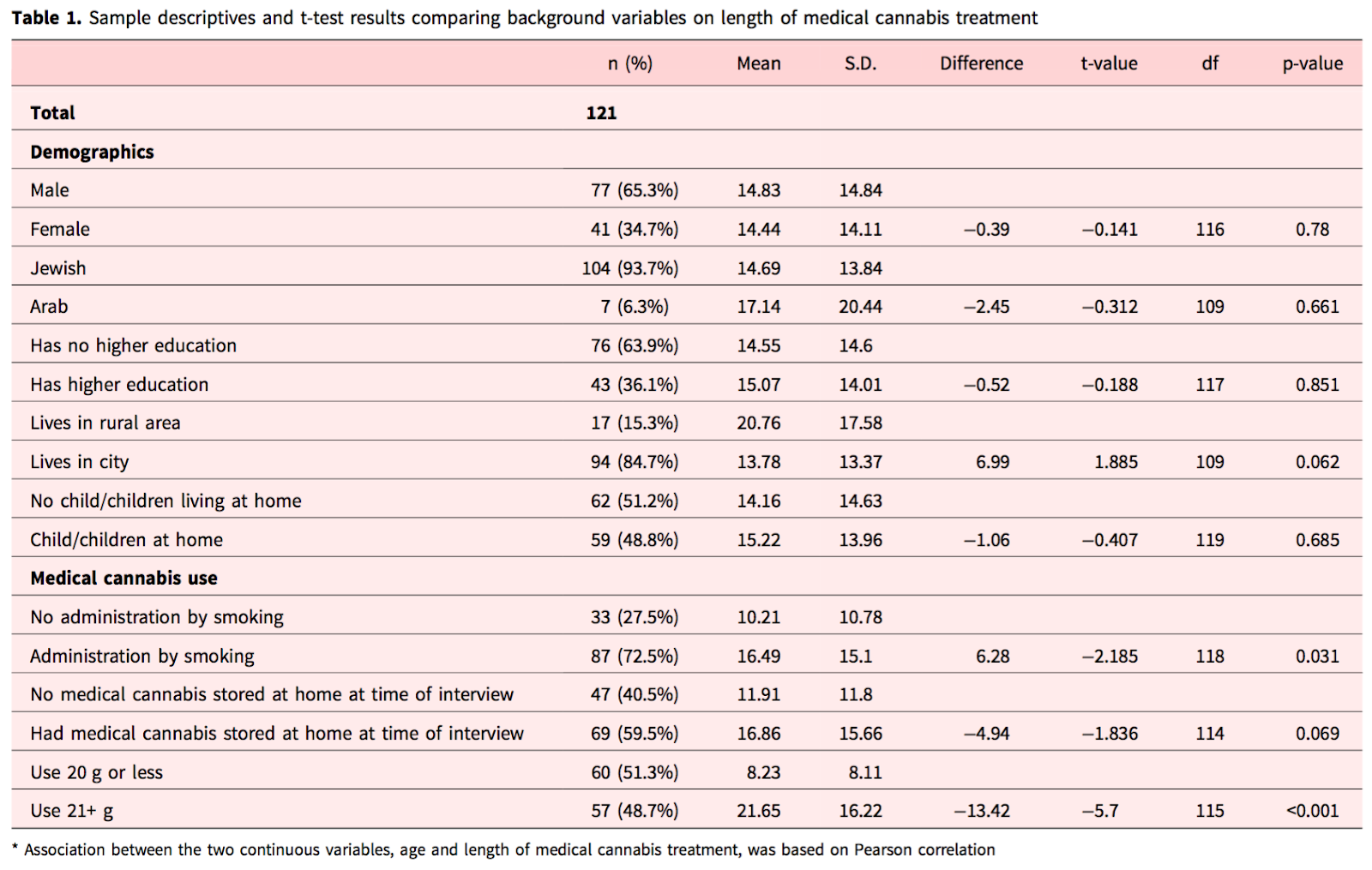
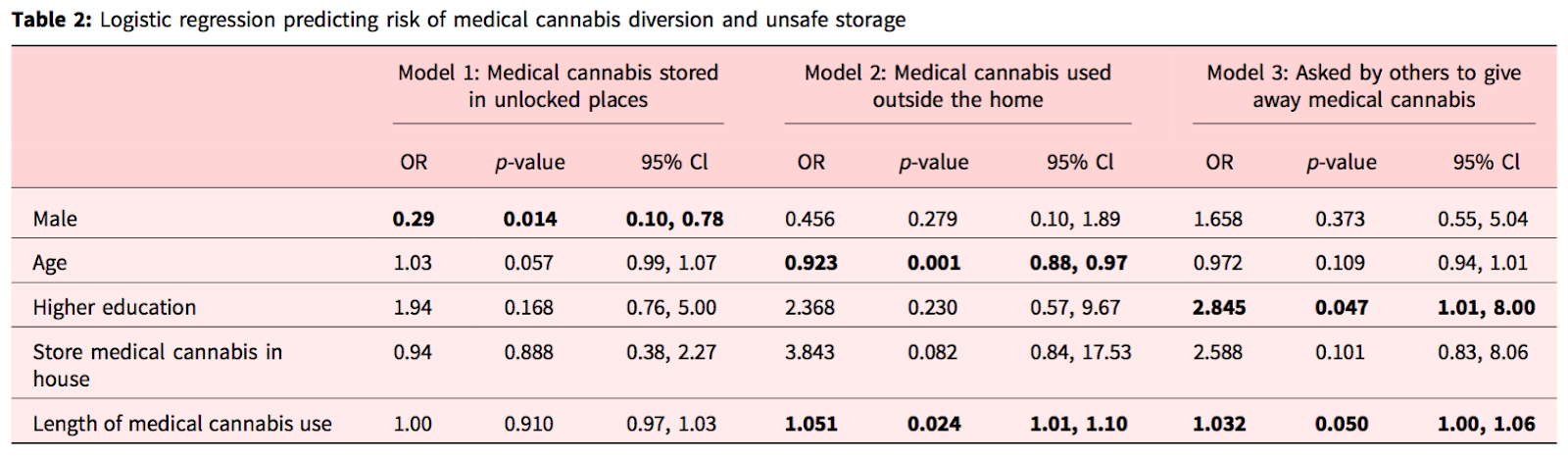
A recent examination of long-term medical cannabis users has demonstrated the need for more consistent training of storage and disposal practices from oncologists. Chronic users tend to increase the dosage taken of medical cannabis over time due to tolerance; higher doses of cannabis are associated with dangerous storage and disposal practices. The current study calls for oncologists who recommend cannabis-based medicine to their patients to have more consistent training in safe storage and disposal methods to prevent patients from ingesting or giving away impure cannabis.
An important point brought up in this article is the pressure some patients experience from their peers to buy cannabis for multiple people with their medical marijuana identification card or certification. Physicians should be wary of this practice and support their patients, reminding them of the accidents that can happen when medications are shared.
Chronic Stress Is Associated with Pain Precipitation and Elevation in DeltaFosb Expression
Researchers have identified Delta-FosB, an osteosarcoma viral oncogene, as a useful molecular marker of sustained pain. The expression of Delta-FosB is significantly elevated by stress-induced pain, exposing its role in the adaptability of nerves. This study supports theories that Delta-FosB plays an important role in drug addiction, depression, and stress adaptation. The interaction between stress, depression, and pain is something that is not yet well-understood. But, as we learn more about cannabis-based medicine, many of the age-old questions about pain have become much clearer.
Statistics show that in the past 15 years, the number of pregnant women using marijuana, especially in their first trimester, has risen greatly. These numbers may be slightly skewed, but they show the importance of more research being done on the effect of cannabis on pregnant women. https://cnn.it/2WWQV1e
Out of 2,835 high school students from North Carolina, 272 students (or 9.6%) reported ever vaping cannabis. Interestingly, the odds of ever vaping cannabis were significantly higher among males (11.0%) compared with females (8.2%), and significantly higher among non-Hispanic white students (11.3%) compared with non-Hispanic black students (5.0%).
It’s clear that white males are the most likely to have ever vaping cannabis. Why might minority students engage less with recreational drug use?
In a study of 367 patients, researchers investigated the safety and effectiveness of cannabis consumption to treat fibromyalgia symptoms. After treatment with cannabis, pain intensity (scale 0–10) reports reduced from a median of 9.0 to a median of 5.0. Interestingly, patients who had previously used cannabis were more likely to have treatment success, whereas patients who shared concerns about cannabis treatment were more likely to have treatment failure. A patient’s mindset can directly affect their treatment outcome.
At CED Clinic, we use the power of education to help patients feel comfortable and confident with their treatment plan.
Oxaliplatin is the most commonly used drug to treat colorectal cancer (CRC), but patients often develop resistance to it. So, researchers conducted a study to determine the effect of CBD in overcoming oxaliplatin resistance in CRC cells. They found that elevated NOS3 phosphorylation is an essential part of the development of oxaliplatin resistance, and CBD successfully decreased NOS3 phosphorylation. This effect resulted in cells overcoming oxaliplatin resistance, which suggests that CBD could be a new strategy to treat colorectal cancer.
The locus coeruleus is a spot in the human brainstem that is integral to our responses to stress, panic, wakefulness, and sleep-wake transitions. Both the cannabinoid receptors and opioid receptors in the locus coeruleus have a synergistic relationship that, once the medical system begins to incorporate more education about cannabinoids, just might change how physicians prescribe pain medication. The interactions of the two receptor types provide a mechanism that could easily and conveniently improve pain control, provide treatments for addiction, and will likely aid those experiencing symptoms of withdrawal. Research focusing on the treatment of opioid addiction with cannabis is ongoing… but hindered by the legal status of cannabis.
Researchers have found that capsaicin cream is an effective and safe method of treating cannabinoid hyperemesis syndrome (CHS) in adolescents. Capsaicin cream has previously been shown to be effective at treating CHS in adults but adolescents have previously been treated with haloperidol, a drug known to have serious side effects. Capsaicin cream offers a much safer and more cost-effective method of treatment for adolescents.
Here, an excellent example of how valuable it is for scientific literature to be read critically and thoughtfully. When reporters read, or extract, or convey only partial conclusions, it is all-too-easy for consumers to absorb an incomplete, undigested message. As consumers of journalism, the public deserves a more knowledgeable understanding. Here (http://bit.ly/2KV0jeG), Forbes (Mike Adams) conveys an unfortunate lack of deep consideration in the reporting. Thankfully, a brief quote is conveyed by Dr. Koturbash, who “was quick to point out that the CBD products coming to market may not pose this particular risk” – but this stone-throw of even-handedness falls short to appropriately balance an article already dripping with misgivings and incomplete evaluation of the material at hand.
For a more layered view of the science, the word “gavage,” as was applied to the mice in the study, describes force-feeding animals with a tube down their throats, often taped to mouths which are then kept gaping open. This is meant to simulate the biological processes of eating (different from giving meds IV, for example.) There is no regard to the stress that this process causes the animals, as they are treated as though they are biological CBD-processing machines. In the days where many people are taking 10mg pills of CBD per day, the amounts of CBD that were force-fed to these animals in this study, if translated to humans, would be 4,305mg, 12,915mg, and 43,050mg over 10 days, or 17,220mg, 51,660mg, and 172,200mg in one-shot doses.) For reference, these days, most dispensaries sell CBD in doses of 10mg, 20mg, up to 2-300mg.)
In the study, the authors suggest that they allow animals to eat “ad libitum,” as if to convey that they are treated with a buffet. And yet, the animals being stuffed with 43,050mg (human equivalent) of CBD still lost weight, while others (given 172,200mg (human equivalent) had uneven weight distribution.) To any reader considering these values critically, it must seem absurd to make conclusions about the actions of CBD as what is causing these effects, as if the fact of over-stuffing itself has no impact at all.
An analogy to this study: If you add 17,000 cars (or 172,000!) to a tunnel on the way to the airport, and stuff each car full of way too many people, there might be problematic levels of concern inside that tunnel.
Let’s hope to see more even-handed consideration and reporting from Forbes, in the future.
Here, another study that shows very different results. Instead of overstuffing mice w/ unrealistic amounts, if one administers CBD at sensible doses in the same population of mice, it turns out that CBD could directly reduce alcohol drinking, improve healthy processes in the liver, and alcohol-related brain damage…
“CBD reduces alcohol-related steatosis & fibrosis in the liver by reducing lipid accumulation, stimulating autophagy, modulating inflammation, reducing oxidative stress, & by inducing death of activated hepatic stellate cells” This new study: