All posts tagged: cannabis

Oncologists Communication with Chronic Medical Cannabis Users

Long-term medical cannabis use and risk factors for diversion- report on physician’s guidance and patients’ behaviour

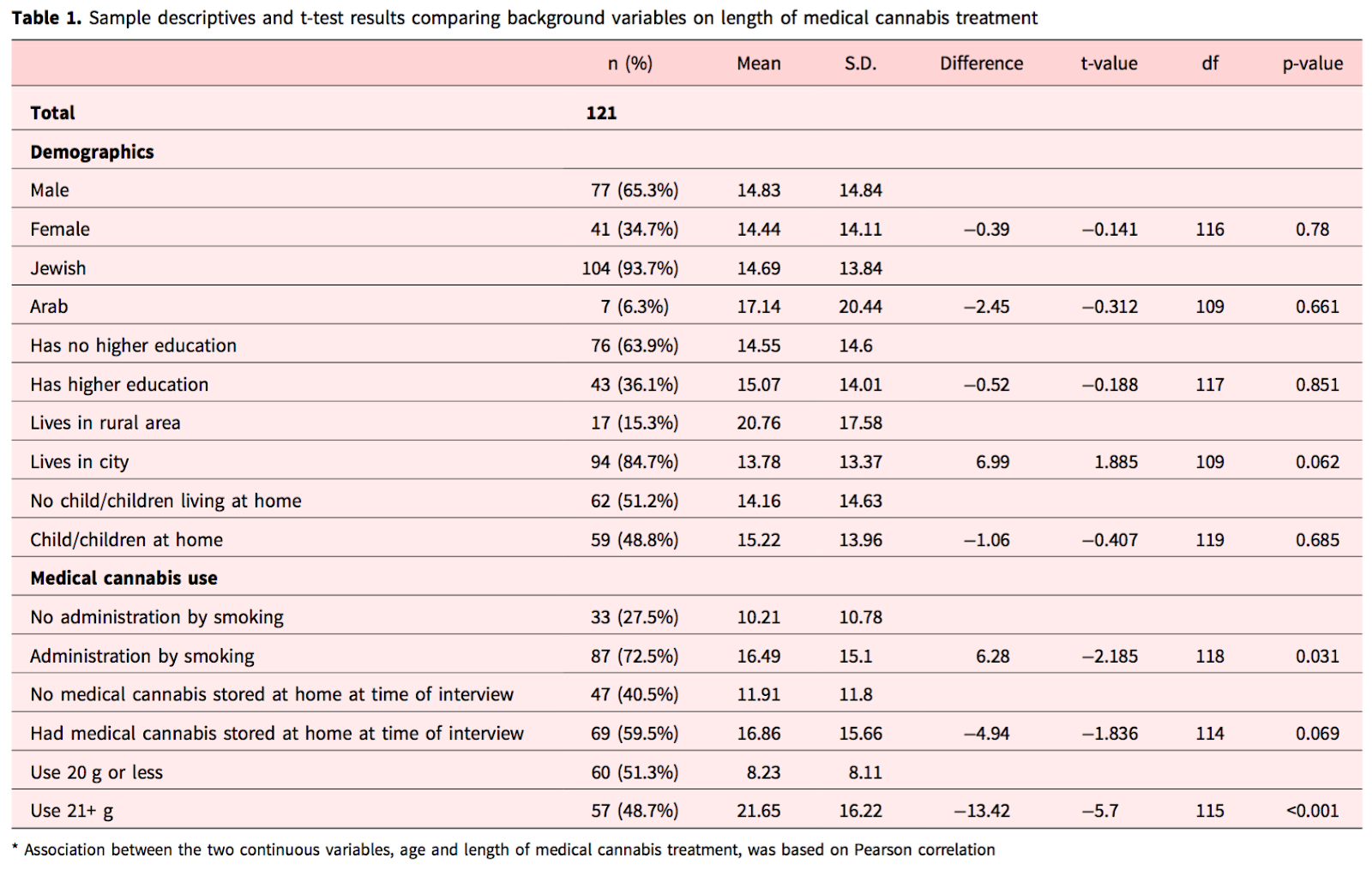
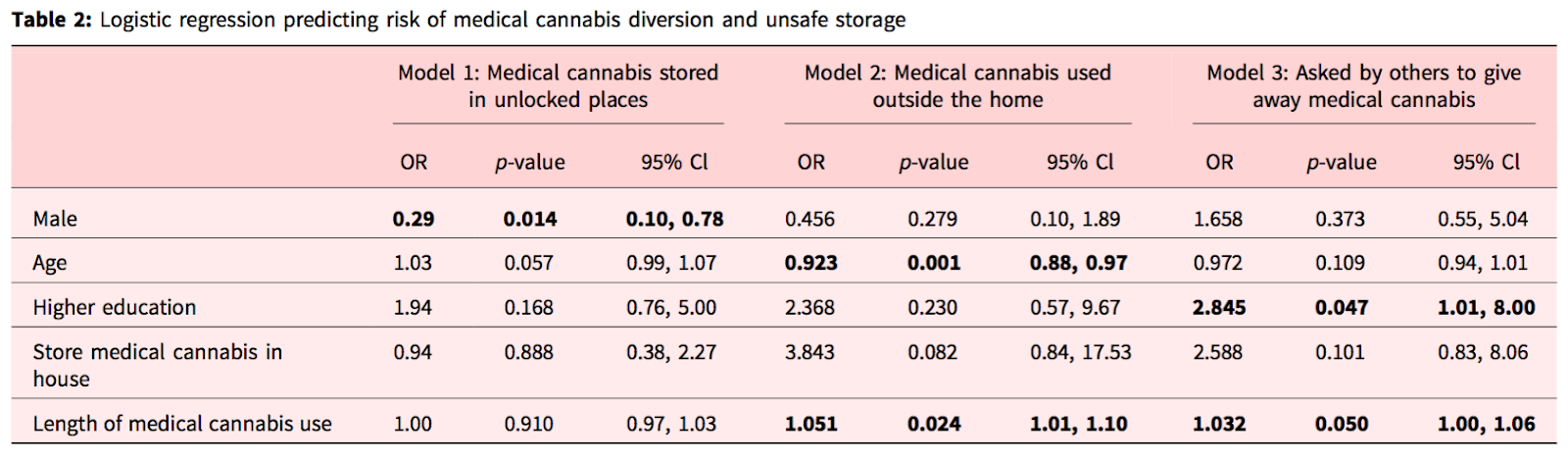
A recent examination of long-term medical cannabis users has demonstrated the need for more consistent training of storage and disposal practices from oncologists. Chronic users tend to increase the dosage taken of medical cannabis over time due to tolerance; higher doses of cannabis are associated with dangerous storage and disposal practices. The current study calls for oncologists who recommend cannabis-based medicine to their patients to have more consistent training in safe storage and disposal methods to prevent patients from ingesting or giving away impure cannabis.

An important point brought up in this article is the pressure some patients experience from their peers to buy cannabis for multiple people with their medical marijuana identification card or certification. Physicians should be wary of this practice and support their patients, reminding them of the accidents that can happen when medications are shared.
View this review (yellow link) or download:

This paper is also stored here:    http://bit.ly/2IyYTEV     inside the CED Foundation Archive

To explore related information, click the keywords below:

Benjamin Caplan, MDOncologists Communication with Chronic Medical Cannabis Users
read more

Pregnant women are using more cannabis over time

Statistics show that in the past 15 years, the number of pregnant women using marijuana, especially in their first trimester, has risen greatly. These numbers may be slightly skewed, but they show the importance of more research being done on the effect of cannabis on pregnant women. https://cnn.it/2WWQV1e

View this review (yellow link) or download:

This paper is also stored here:     http://bit.ly/2IwLxcp    inside the CED Foundation Archive

To explore related information, click the keywords below:

Benjamin Caplan, MDPregnant women are using more cannabis over time
read more

Vaping cannabis among adolescents: prevalence and associations with tobacco use from a cross-sectional study in the USA

Out of 2,835 high school students from North Carolina, 272 students (or 9.6%) reported ever vaping cannabis. Interestingly, the odds of ever vaping cannabis were significantly higher among males (11.0%) compared with females (8.2%), and significantly higher among non-Hispanic white students (11.3%) compared with non-Hispanic black students (5.0%).

It’s clear that white males are the most likely to have ever vaping cannabis. Why might minority students engage less with recreational drug use?

View this review (yellow link) or download:

This paper is also stored here:    http://bit.ly/2L6zYdv     inside the CED Foundation Archive

Benjamin Caplan, MDVaping cannabis among adolescents: prevalence and associations with tobacco use from a cross-sectional study in the USA
read more

Safety and Efficacy of Medical Cannabis in Fibromyalgia

In a study of 367 patients, researchers investigated the safety and effectiveness of cannabis consumption to treat fibromyalgia symptoms. After treatment with cannabis, pain intensity (scale 0–10) reports reduced from a median of 9.0 to a median of 5.0. Interestingly, patients who had previously used cannabis were more likely to have treatment success, whereas patients who shared concerns about cannabis treatment were more likely to have treatment failure. A patient’s mindset can directly affect their treatment outcome.

At CED Clinic, we use the power of education to help patients feel comfortable and confident with their treatment plan.

View this review (yellow link) or download:

This paper is also stored here:     http://bit.ly/2WWLyz6    inside the CED Foundation Archive

To explore related information, click the keywords below:

Benjamin Caplan, MDSafety and Efficacy of Medical Cannabis in Fibromyalgia
read more

Profile of Dr Caplan, Dr Grinspoon, CED Clinic, and modern Medical Cannabis in Alcoholism & Drug Abuse Weekly

The esteemed medical periodical, Alcoholism & Drug Abuse Weekly, takes a closer look at modern medical cannabis with Dr Grinspoon and I. Our discussion brings an insider’s look at how the system operates, from clinic to dispensary, the dynamic changes we’ve already seen and highlights some of the changes to come. Included are The Role of Medicine, The Ethics of doctors in business, The Patient Experience, Physician’s Support, Growing the Plant, and a sit-down with a local dispensary.

View this review (yellow link) or download:

This paper is also stored here:     http://bit.ly/2Lc2H0R    inside the CED Foundation Archive

To explore related information, click the keywords below:

Benjamin Caplan, MDProfile of Dr Caplan, Dr Grinspoon, CED Clinic, and modern Medical Cannabis in Alcoholism & Drug Abuse Weekly
read more

CBD Overcomes Resistance to current treatment of Human Colorectal Cancer Cells

Oxaliplatin is the most commonly used drug to treat colorectal cancer (CRC), but patients often develop resistance to it. So, researchers conducted a study to determine the effect of CBD in overcoming oxaliplatin resistance in CRC cells. They found that elevated NOS3 phosphorylation is an essential part of the development of oxaliplatin resistance, and CBD successfully decreased NOS3 phosphorylation. This effect resulted in cells overcoming oxaliplatin resistance, which suggests that CBD could be a new strategy to treat colorectal cancer. 

View this review (yellow link) or download:

This paper is also stored here:    http://bit.ly/2IwfVn9     inside the CED Foundation Archive

To explore related information, click the keywords below:

Benjamin Caplan, MDCBD Overcomes Resistance to current treatment of Human Colorectal Cancer Cells
read more

Cannabinoid Receptors Working with Opioid Receptors

The locus coeruleus is a spot in the human brainstem that is integral to our responses to stress, panic, wakefulness, and sleep-wake transitions. Both the cannabinoid receptors and opioid receptors in the locus coeruleus have a synergistic relationship that, once the medical system begins to incorporate more education about cannabinoids, just might change how physicians prescribe pain medication. The interactions of the two receptor types provide a mechanism that could easily and conveniently improve pain control, provide treatments for addiction, and will likely aid those experiencing symptoms of withdrawal. Research focusing on the treatment of opioid addiction with cannabis is ongoing… but hindered by the legal status of cannabis.

View this review (yellow link) or download:

This paper is also stored here:     http://bit.ly/2MMeYeK    inside the CED Foundation Archive

To explore related information, click the keywords below:

Benjamin Caplan, MDCannabinoid Receptors Working with Opioid Receptors
read more

Public Cannabis Consumption Now Allowed In Colombia… Is Full Marijuana Legalization Next?

This week, Colombia’s Constitutional Court overruled a ban on the public consumption of cannabis. Now, citizens wonder if the government will soon legalize recreational cannabis in addition to the already-legal medical cannabis. 

https://www.forbes.com/sites/javierhasse/2019/06/19/colombia-public-cannabis-consumption/#22612e3229e9

Benjamin Caplan, MDPublic Cannabis Consumption Now Allowed In Colombia… Is Full Marijuana Legalization Next?
read more

Cannabis sales could hit $15 billion globally this year

Fueled by CBD product sales and Canada’s recent legalization of marijuana, the world’s cannabis market could total $14.9 billion in 2019, up 36% from 2018, according to a new report released Thursday.

https://www.cnn.com/2019/06/20/tech/cannabis-industry-15-billion/index.html

Benjamin Caplan, MDCannabis sales could hit $15 billion globally this year
read more

Capsaicin Cream Treats Cannabinoid Hyperemesis Syndrome in Adolescents

Capsaicin Cream for Treatment of CHS adolescent

Researchers have found that capsaicin cream is an effective and safe method of treating cannabinoid hyperemesis syndrome (CHS) in adolescents. Capsaicin cream has previously been shown to be effective at treating CHS in adults but adolescents have previously been treated with haloperidol, a drug known to have serious side effects. Capsaicin cream offers a much safer and more cost-effective method of treatment for adolescents.

View this review (yellow link) or download:

This paper is also stored here:   http://bit.ly/2F8Gtcc      inside the CED Foundation Archive

To explore related information, click the keywords below:

Benjamin Caplan, MDCapsaicin Cream Treats Cannabinoid Hyperemesis Syndrome in Adolescents
read more
