Cannabis

Utilizing Cannabis Practices as a Model for Human Genome Editing in the United Kingdom

License gene edits like cannabis

In Summary

An op-ed in the United Kingdom called for the regulation of editing of the human genome to be modeled after cannabis regulation. The ethics concerning genome editing and human reproduction have been politically and socially dividing, much like the legalization of cannabis. The authoring physician points out that, much like cannabis prohibition, if genomic editing is completely banned a black market will appear, offering risky and illegal procedures. By raising public awareness of the issue and pointing out that the approval of such endeavors will result in the safety of such practices this researcher aims to create a public forum that allows for open political communication. 

Although this piece was featured in the United Kingdom, Americans can learn about the benefits that come from this type of piece. The other does well to point out how prohibition breeds dangerous and illegal practices in the underground. By legalizing cannabis for medical and recreational use the federal and local governments would be able to further regulate cannabis composition and accessibility, as well as ensure purity and safety standards. Legalizing cannabis would also economically benefit the United States by employing cultivators, budtenders, and funding research projects. Legalization would allow for more control and lower the possible dangers of cannabis use. 

The study is available for review or download here

View more studies like this in the CED Foundation Archive 

To explore related information, click the keywords below:

Benjamin Caplan, MDUtilizing Cannabis Practices as a Model for Human Genome Editing in the United Kingdom
read more

Alcohol and Cannabis Used to Cope with Depression

Internalizing Symptoms and Cannabis and Alcohol Use- Between- and Within-Person Risk Pathways With Coping Motives

In Summary

The American Psychology Association recently shared research demonstrating how individuals use alcohol and cannabis to cope with depression. Between and within-person analysis demonstrated that those who abused alcohol to cope with their depression demonstrated increased alcohol coping habits 12 months later and worsened depression symptoms. Although those patients who utilized cannabis to treat their depression maintained that use at the 12-month check-up their depression they did not report worsening depressive symptoms or increased cannabis use. Further research is needed to determine the validity of cannabinoids as an efficient treatment method for depression and to development of coping-related interventions for those abusing substances. 

This article also highlights the relationship between cannabis and social anxiety as well as alcohol and social anxiety. Cannabis products are frequently recommended for anxiety, specifically the most popular non-psychoactive component, cannabidiol (CBD). The featured article focussed on cannabis as a whole which includes ∆-9-tetrahydrocannabinol (THC), the most abundant psychoactive component of cannabis, which has been known to exacerbate feelings of anxiety. When studying the relationship between cannabis use and anxiety-related disorders it is important to study each cannabinoid separately for their effect because they operate so differently within the endocannabinoid system; then move on to examine whole cannabis effects as cannabinoids and other chemical compounds produced by cannabis plants are able to interact with each other and produce an entourage effect. 

The study is available for review or download here

View more studies like this in the CED Foundation Archive 

To explore related information, click the keywords below:

Benjamin Caplan, MDAlcohol and Cannabis Used to Cope with Depression
read more

More Research on Cannabis and Pregnancy

Effects of cannabis tetrahydrocannabinol on endocannabinoid homeostasis in human placenta

In Summary

 Researchers recently revealed a possible mechanism for the effect of cannabis on pregnancy outcomes via the endocannabinoid system. The placenta contains endocannabinoid receptors and becomes part of the endocannabinoid system of the mother and fetus during pregnancy. The data found in this article provides evidence that ∆-9-tetrahydrocannabinol (THC) impairs the placental endocannabinoid system by disrupting the production and degradation of endogenous cannabinoids. The altered endocannabinoid levels disrupt the trophoblast that comprises a large portion of the placenta, decreasing the number of nutritional compounds that are delivered to the fetus. Further research is necessary to validate the effect of the disrupted placental endocannabinoid system. 

This research is a great addition to the current medical research concerning cannabis use and pregnancy but more is still needed. The featured article only focused on the effect of THC on the placenta and resulting birth outcomes but there is so much still to learn. THC is only one of the many medically beneficial cannabinoids present within cannabis products, not to mention terpenes and flavonoids which have also been revealed to possess medicinal properties. As more young women consume medical cannabis for various reasons and then become pregnant, it is imperative that all of the possible effects of cannabis on pregnancy outcomes and overall gestation be revealed. Obstetricians need to know if cannabinoids have little to no effect on pregnancy and are safe for women to continue taking or if alternative therapies need to be decided. 

The study is available for review or download here

View more studies like this in the CED Foundation Archive 

To explore related information, click the keywords below:

Benjamin Caplan, MDMore Research on Cannabis and Pregnancy
read more

Further Evidence for Cannabis as an Adjunctive Therapy to Opioids

Effects of cannabinoid administration for pain- A meta-analysis and meta-regression

In Summary

A recent meta-analysis provided further evidence that cannabis can be used as a replacement and adjunctive therapy option for opioids. Across all of the studies, it was found that cannabis had a medium-to-large effect on the subjective pain felt. The included studies included a range of given doses, all reported in milligrams and were conducted in various pain models, including Human Immunodeficiency Virus, Cancer, Neuropathic Pain, Diabetes, and more. Further research is needed to standardize an appropriate dose for each condition and ensure the validity of such medications. 

The authors take care to emphasize the need for alternative pain therapies for opioids that are safer and more economically responsible. Currently, pain-related costs from patients, caretakers, and healthcare facilities continue to grow beyond $600-billion annually, as more people grow dependent on opioids. Cannabis is much more cost-effective, and even if it does not entirely replace opioid therapies and is simply an adjunct therapy, it has the potential to greatly reduce the amount of opioid prescribed and lower the necessary dose. Opioids are highly addictive whereas cannabis has a much better safety profile, yet cannabis is still deemed medically irrelevant by the federal government. More research needs to be conducted to reduce the chance of addiction, the opioid crisis in general, and reduce the economic burden of pain-related costs in the United States. 

The study is available for review or download here

View more studies like this in the CED Foundation Archive 

To explore related information, click the keywords below:

Benjamin Caplan, MDFurther Evidence for Cannabis as an Adjunctive Therapy to Opioids
read more

The Effect of Cannabidiol on Alcohol

Effects of Cannabidiol on Alcohol-Related Outcomes- A Review of Preclinical and Human Research

In Summary

A review of preclinical research studies has revealed to possible beneficial effects of cannabidiol on alcohol-related outcomes. It was found that cannabidiol (CBD) is able to lessen alcohol consumption although the mechanism is not well understood. CBD may also protect consumers from the negative effects of alcohol use such as liver and brain damage. It is likely that CBD provides these protective effects through its modulation of inflammatory processes. It is recommended that further research is conducted in order to validate these findings and expand upon the knowledge of how CBD interacts with other common substances. 

As cannabis-based products become more widely accepted among the medical community and within society it is imperative that the interactions between cannabis and other drugs are known. Those who wish to use cannabis for certain ailments but are already on other medications may consume cannabis and experience negative side-effects due to the interaction of those drugs. Cannabinoids, terpenes, and flavonoids need to be modeled alongside other common medications so that physicians can safely recommend medications and so that pharmacists are able to accurately advise customers when they pick up prescriptions. Research is needed to ensure public safety in this time of evolving medications. 

The study is available for review or download only from the original publisher

View more studies like this in the CED Foundation Archive 

To explore related information, click the keywords above:

Benjamin Caplan, MDThe Effect of Cannabidiol on Alcohol
read more

Long-Term Cannabis Use Can Impair Learning

Cognitive, physical, and mental health outcomes between long-term cannabis and tobacco users

In Summary

Researchers have recently compared long-term cannabis and tobacco users, finding that cannabis users had more difficulties learning but better health overall than tobacco users. This study compared tobacco and cannabis users after they had abstained from their chosen substance for 15 hours before running through a myriad of texts. Although it took cannabis users longer to acquire and recall novel information cannabis users reported better psychological, somatic, and general health than tobacco users, as well as lowered stress levels, more similar to controls. Tobacco users were also revealed to have more emotional problems than cannabis users and controls. This research may prove beneficial in the creation of programs that utilize cannabis to aid in the cessation of tobacco use. 

This research, while highlighting the advantages of cannabis use over tobacco use, also emphasizes the negative impact of cannabis on individuals in school. Whether those individuals are enrolled in a high school or upper-level academic program, consistent use of cannabis may prove harmful to their overall performance. Patients should always discuss their concerns with their recommending physicians, and should be mindful of the current gaps in medical knowledge concerning cannabis. This information also does not apply to every cannabis-based product, like most topicals. Topicals, unless high-dose tetrahydrocannabinol patches, generally do not cause psychoactive effects and would, therefore, have no affect learning. More research is needed to fully understand which cannabinoids, doses, and frequency of doses, affect learning so that patients are well informed about their medications. 

The study is available for review or download here

View more studies like this in the CED Foundation Archive 

http://bit.ly/drcaplanTo explore related information, click the keywords below:

Benjamin Caplan, MDLong-Term Cannabis Use Can Impair Learning
read more

The Respiratory Effects of Smoking Cannabis

A Systematic Review of the Respiratory Effects of Inhalational Marijuana

In Summary

A recent meta-analysis has compiled a list of all known effects of smoking medical cannabis. Smoke is produced when medical cannabis is combusted by a flame, like when users smoke a bowl of flower products. Although fewer carcinogens were found in the smoke produced from cannabis than the smoke produced from cigarettes, those who choose to smoke medical cannabis still put themselves at great risk of developing lung cancer, spontaneous pneumothorax, bullous emphysema, and COPD. The medical benefits like bronchodilation, pain relief, and uplifting feelings are still able to take effect but patients considering smoking cannabis should be made aware of the risks associated with the inhalation of smoke. Other consumption methods such as vaporization, edibles, or topicals pose much less of a health risk to users. 

This article highlights the importance of choosing an appropriate consumption method depending on your ailment. Those suffering from lung cancer or COPD may be less inclined to vaporize their marijuana because of the lung strain, or more inclined to vaporize marijuana to replace a possible cigarette habit. Vaporization occurs at a much lower temperature than combustion, which requires a flame, which provides more efficient delivery of the cannabinoids, terpenes, and flavonoids present in a flower product. Each cannabinoid has a specific vaporization temperature that optimizes the benefits of that cannabinoid and many vaporizers have been designed with the ability to heat up to specific temperatures so that patients can get the most out of their product. Users should discuss the best options for their ailment with their physicians and budtenders.

The study is available for review or download here

View more studies like this in the CED Foundation Archive 

To explore related information, click the keywords below:

Benjamin Caplan, MDThe Respiratory Effects of Smoking Cannabis
read more

The Benefits and Limitations of Vaporization

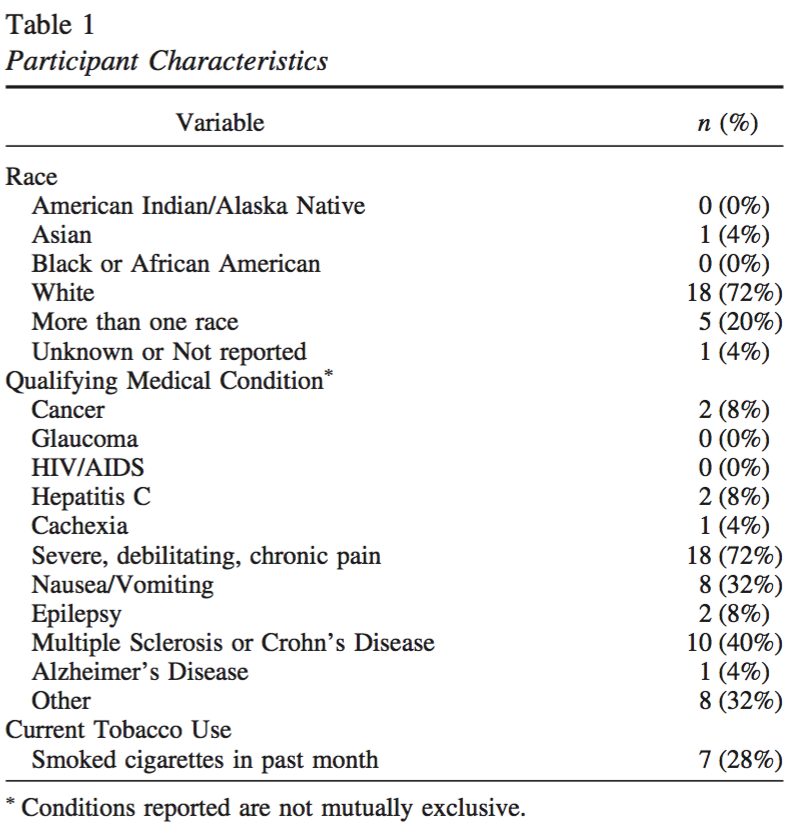
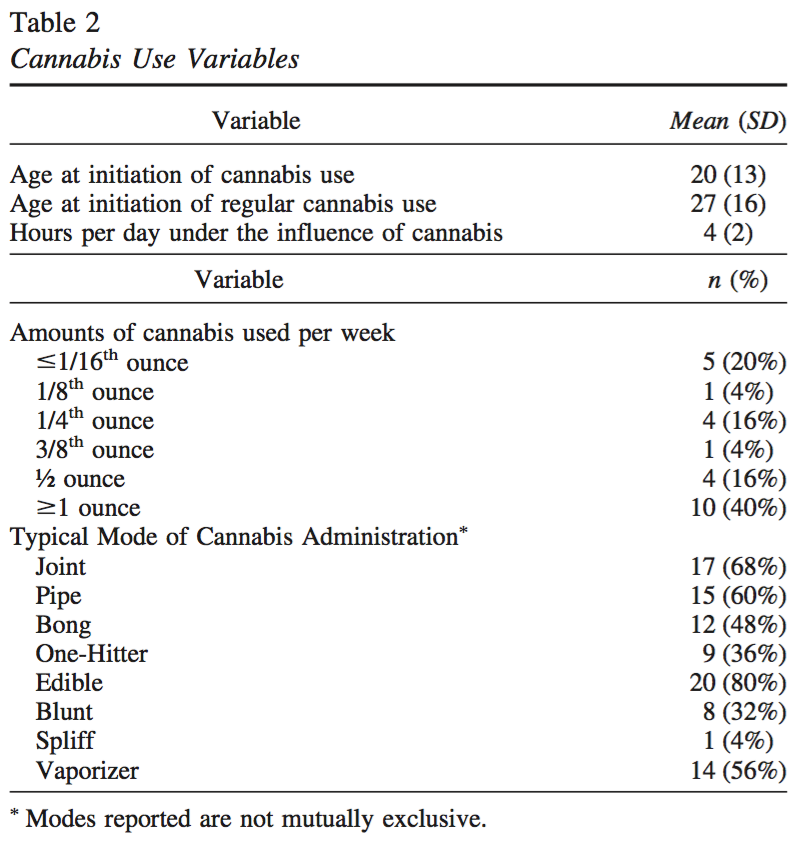
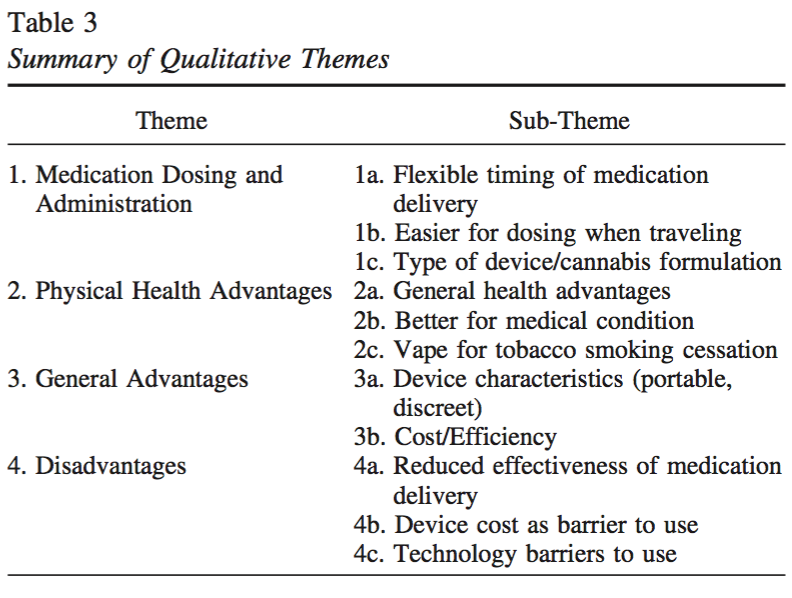
A Qualitative Analysis of Cannabis Vaporization Among Medical Users

In Summary

Researchers have recently analyzed popular vaping behavior and revealed the advantages of vaporizing medical cannabis. The general advantages of vaporizing medical cannabis include portability, concealability, and efficiency, while the medical advantages like promoting tobacco cessation and it’s quick-acting effects. There are also limitations to vaporization, like technology-use barriers for those who find technology difficult to work with and the cost of such devices. Vaporizing may also prove to be advantageous or disadvantageous for patients depending on their medical condition, meaning that all patients should discuss consumption mechanisms with their physician. 

As the cannabis industry continues to grow various consumption methods become readily available for consumers, each presenting its own benefits and limitations. Patients should thoroughly research the different consumption methods and discuss which method would work best for them. Vaporizers in the featured article were mainly portable but desktop vaporizers are also available and often more efficient. The world of edibles continues to grow and it better for those looking for longer-lasting, stronger, and delayed effects. Tinctures are easy to prepare at home or buy online and are ideal for incorporating into patients’ favorite meals, smoothies, or can be taken sublingually for fast-acting effects and raw cannabinoids. Experimentation is encouraged, just be sure to start at a slow dose and slowly feel out the effects. 

The study is available for review only from the original author/publisher, per their request.

View more studies like this in the CED Foundation Archive 

To explore related information, click the keywords below:

Benjamin Caplan, MDThe Benefits and Limitations of Vaporization
read more

New Opportunities Arise as Cannabis is Legalized in Canada

“Tea” Time? Cannabis Legalization in Canada

In Summary

Last summer an op-ed came out in response to cannabis legalization in Canada discussing the risks and benefits of the legalization. The author acknowledges the myriad of health benefits that cannabis has been shown to treat but also brings forth the gaps in our knowledge that still remain. The piece urges physicians to fully discuss the most current information with their patients when recommending cannabis and for at-home cultivators to carefully manage their plants to prevent underage consumption. The author ends the piece on a hopeful note, mentioning that the only certainty of legalization cannabis is that much more robust research will be able to be conducted and provide more information for the public. 

The author emphasizes the research opportunities that have now opened up in Canada due to the legalization of cannabis, highlighting the limitations of cannabis research in the United States. As cannabis is currently ruled a schedule I drug under the Controlled Substances Act the federal government sees no medical benefit in medical cannabis, despite an abundance of research. Researchers around the world have found evidence that cannabinoids, terpenes, and flavonoids can provide novel therapies for various disorders yet research in the US is still extremely limited by the lack of federal funding. Canada’s decision to legalize cannabis opens the door for so many cannabis-based therapies to be developed, and for economic and healthcare reasons, other countries should follow along.

The study is available for review or download here

View more studies like this in the CED Foundation Archive

To explore related information, click the keywords below:

Benjamin Caplan, MDNew Opportunities Arise as Cannabis is Legalized in Canada
read more

Possible Associations Between Recreational Cannabis and Birth Outcomes

The association between the legalization of recreational marijuana and both small for gestational age births and NICU admissions in Colorado

In Summary

Researchers have recently found no evidence that the legalization of recreational cannabis increases the risk for small gestational age (SGA) births but may be linked to neonatal intensive care unit (NICU) admissions immediately post-birth. The study merely looks at the prevalence of both SGA and NICU admissions immediately post-legalization of recreational cannabis in Colorado and claims no causation conclusions can be drawn from the gathered data but did note an increase of 1% of NICU admissions per month immediately following legalization. The rate of the SGA births decreased following the new laws meaning cannabis may not affect the growth of a fetus or could improve development but future research is encouraged to ensure these results and identify possible causation for an increase in NICU admissions, which could be due to a myriad of factors. 

This article serves as a call for research so that patients who take cannabis and fall pregnant are fully aware of the possible risks associated with continuing cannabis use during pregnancy. Currently, most obstetricians and gynecologists advise against cannabis use due to the lack of knowledge concerning cannabis and fetal development but those who fall pregnant and rely on cannabis are often left unaware of alternative options. Considering the uncertainty of the effects of cannabis on pregnancy outcomes and the inconsistency between the few studies currently published more research is definitely needed so that pregnant women can continue to receive safe and effective treatment. 

The study is available for review or download here

View more studies like this in the CED Foundation Archive 

To explore related information, click the keywords below:

Benjamin Caplan, MDPossible Associations Between Recreational Cannabis and Birth Outcomes
read more